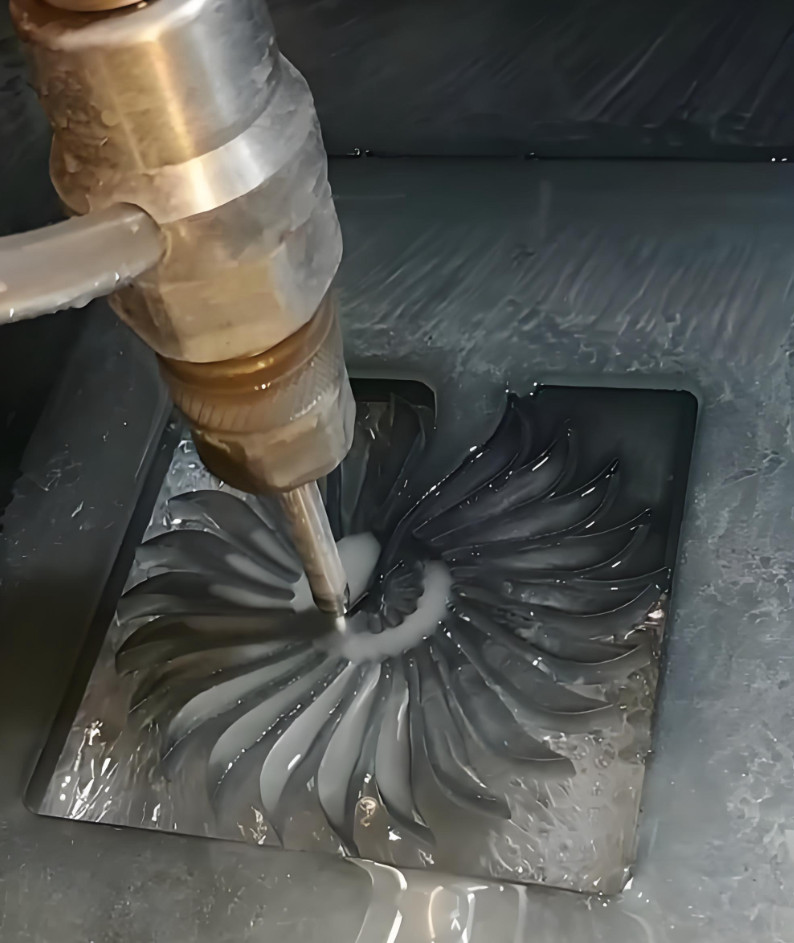

What is a Precision Water Jet Cutter Machine?
A precision water jet cutter machine is a computer-controlled industrial tool that uses a supersonic stream of water, often mixed with abrasive particles, to cut, shape, and machine a vast array of materials with exceptional accuracy. Described as a “controlled, accelerated erosion process,” this technology stands out for its ability to cut virtually any material—from soft foam and rubber to hardened titanium and stone—without generating heat .
The versatility of the precision water jet cutter machine is one of its greatest strengths. It can process everything from metals, glass, and ceramics to composites and plastics, making it an indispensable tool across aerospace, automotive, medical, and manufacturing sectors . Its cold-cutting nature means it leaves No Heat-Affected Zone (HAZ), preserving the material’s original structure and preventing warping, hardening, or thermal distortion common with laser or plasma cutting.
The Pursuit of Perfection: Understanding Waterjet Cutting Accuracy
When investing in a precision water jet cutter machine, understanding its accuracy is paramount. While manufacturers often advertise impressive positional accuracies for the machine’s gantry (e.g., ±0.001″), the more critical metric is the final part accuracy, which is influenced by a complex interplay of factors.
What Level of Accuracy Can You Expect?
A high-quality precision water jet cutter machine can achieve part tolerances in the range of ±0.001″ to ±0.005″ (0.025 mm to 0.127 mm) . However, achieving the tightest tolerances consistently depends on the application. For parts under 1 inch thick, holding ±0.003″ is often feasible, while thicker materials may see a decrease in accuracy, sometimes to around 0.1″ for very thick workpieces .
The following table compares the typical tolerances of waterjet cutting with other common industrial processes, highlighting its competitive position for precision cold cutting :
| Cutting Process | Typical Tolerance | Key Characteristic |
|---|---|---|
| Waterjet Cutting | ±0.001″ to ±0.005″ | Cold process, no heat-affected zone, highly versatile. |
| Laser Cutting | ±0.005″ | Thermal process; can create a heat-affected zone on materials. |
| Plasma Cutting | ±0.02″ | Thermal process; generally used for rougher cuts on conductive metals. |
| EDM Cutting | ±0.0001″ | Very precise but slow; typically for conductive materials only. |
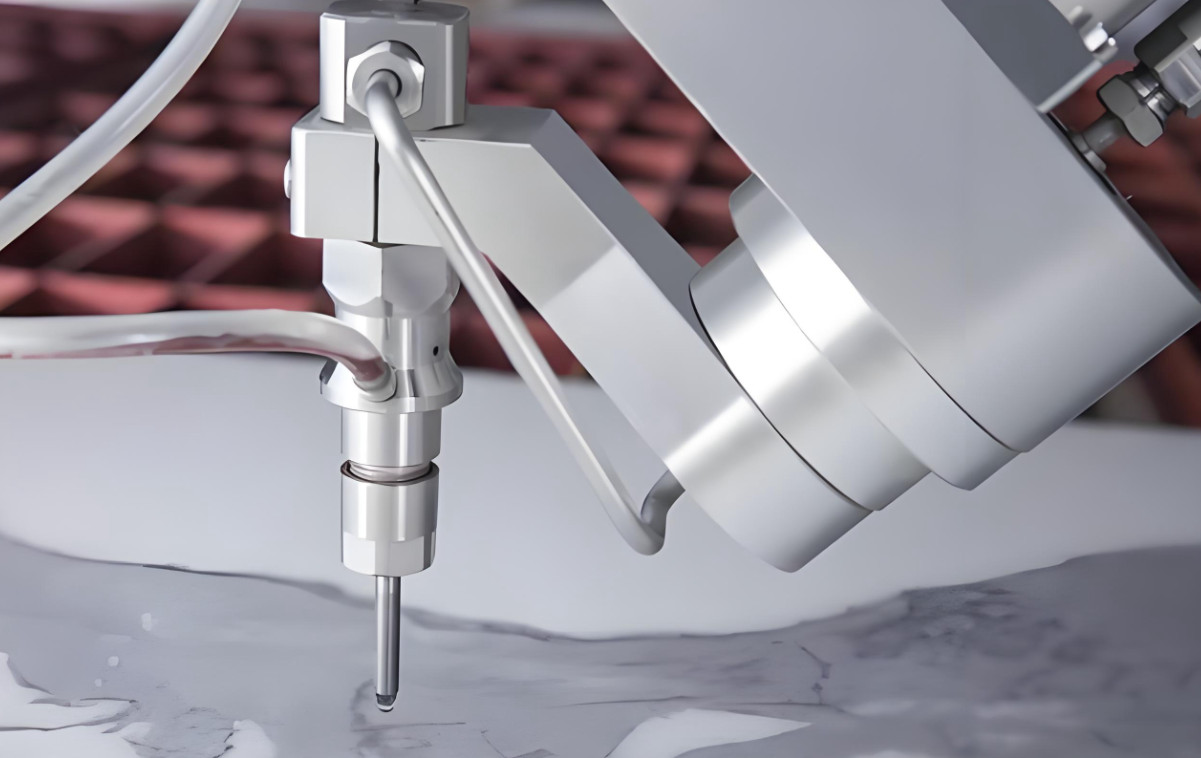

Key Factors Influencing a Precision Water Jet Cutter Machine
Achieving high accuracy is not automatic; it requires optimal setup and maintenance of several key factors:
-
Machine Calibration and Stability: The foundation of accuracy is a rigid gantry and a stable table that isolates the cutting process from vibrations. Any instability can lead to “witness marks” and compromise tolerances .
-
The Cutting Stream and Abrasive Quality: The waterjet stream is not a rigid tool. Its behavior must be precisely compensated for by advanced software. Using a consistent, high-quality abrasive is crucial, as inconsistent grain size leads to improper cuts and wider tolerances .
-
Software and Controller Sophistication: Modern precision water jet cutter machine systems use advanced CAD/CAM software and high-end controllers that create complex toolpaths. These systems dynamically adjust the cutting head’s speed and position to account for natural jet lag and other physical phenomena, ensuring accuracy from the top to the bottom of the cut .
-
The Human Element: Operator Skill: Perhaps the most overlooked factor is the operator. A skilled operator knows how to nest parts, create stable toolpaths, properly fixture material, and troubleshoot the machine to maintain peak performance and achieve tight tolerances reliably .

Unleashing 3D Potential: The 5-Axis Waterjet Cutter Head
While traditional 3-axis waterjets (moving in X, Y, and Z) are excellent for 2D profiling, the introduction of the 5-axis waterjet cutter head has revolutionized the technology, transforming it into a true 3D manufacturing tool.
What is 5-Axis Waterjet Cutting?
A 5-axis system incorporates two additional rotational axes to the standard three:
-
A-Axis: Allows the cutting head to tilt, typically up to 60 degrees.
-
C-Axis: Allows the cutting head to rotate a full 360 degrees around the Z-axis .
This combination enables the nozzle to orient itself at complex angles relative to the workpiece, moving perpendicular to the cutting surface even on contoured parts.
Critical Advantages of a 5-Axis System
Integrating a 5-axis waterjet cutter head into a precision water jet cutter machine provides several game-changing benefits:
-
Elimination of Taper: The natural V-shaped kerf (cut width) that occurs in thick materials with 3-axis systems can be completely eliminated by tilting the head. This results in perfectly vertical walls and edges, a hallmark of high precision .
-
Complex Cutting and Beveling: It enables clean and accurate chamfers, bevels, and complex 3D contours in a single setup. This is ideal for applications like weld preparation, where a precise bevel angle is required .
-
Operational Efficiency: By completing complex cuts and finishing operations in one step, a 5-axis system dramatically reduces or eliminates the need for secondary machining, grinding, or drilling stations. This compresses lead times and lowers overall production costs .
-
Unmatched Flexibility: Users can switch from cutting flat 2D parts to machining complex 3D parts in different materials without any tool changes, making the machine incredibly versatile .

Market Trends and the Future of Precision Waterjet Cutting
The market for precision water jet cutter machine technology is dynamic and growing, driven by several key trends that highlight its increasing importance in modern manufacturing.
-
Rapid Growth of 5-Axis and Automation: There is a significant shift towards 5-axis and robotic waterjet systems. The 5-axis waterjet cutting machine market is projected to grow at a CAGR of 5.6% from 2025 to 2032 . This growth is fueled by the demand for complex geometries and the efficiency gains of completing parts in a single setup .
-
Demand from Advanced Manufacturing Sectors: Industries such as aerospace, electric vehicles (EVs), and medical devices are major drivers. The waterjet’s ability to cut hard-to-machine alloys (e.g., titanium, high-strength steels) and composites without a HAZ is critical for EV battery housings, aerospace components, and burr-free medical implants like orthopedic screws .
-
Technological Advancements in Pumps and Controls: Pump technology continues to evolve, with ultra-high-pressure systems (up to 90,000 PSI and beyond) enabling faster cutting speeds and cleaner edges. Furthermore, the integration of IoT, predictive diagnostics, and more sophisticated control software is making precision water jet cutter machine systems smarter, more efficient, and easier to operate .
-
Sustainability and Cost Efficiency: As manufacturers focus on sustainability, the waterjet’s eco-friendly attributes—no hazardous gases, reduced waste due to narrow kerf and efficient nesting, and potential for water recycling—make it an attractive choice. Newer pump designs also focus on reducing energy consumption and abrasive usage, lowering the total cost of ownership .

The precision water jet cutter machine has firmly established itself as a cornerstone of modern manufacturing. Its unique combination of cold-cutting versatility, exceptional accuracy, and the advanced capabilities of 5-axis technology makes it an unrivaled solution for an ever-expanding range of industrial applications. As market trends continue to favor flexibility, precision, and efficiency, the role of the waterjet is set to become even more critical. For businesses looking to stay competitive, understanding and leveraging the full potential of this powerful technology is no longer an option—it’s a necessity.